Less manual programming
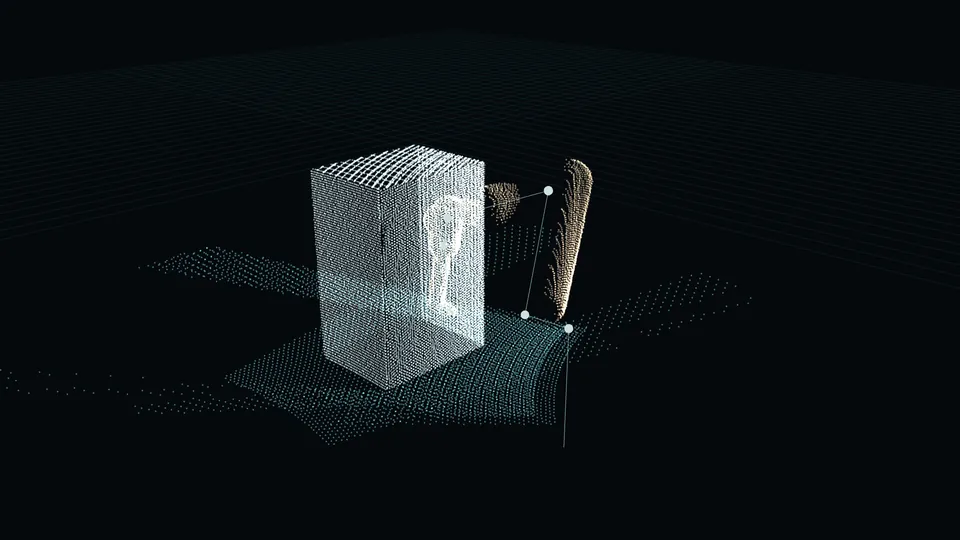
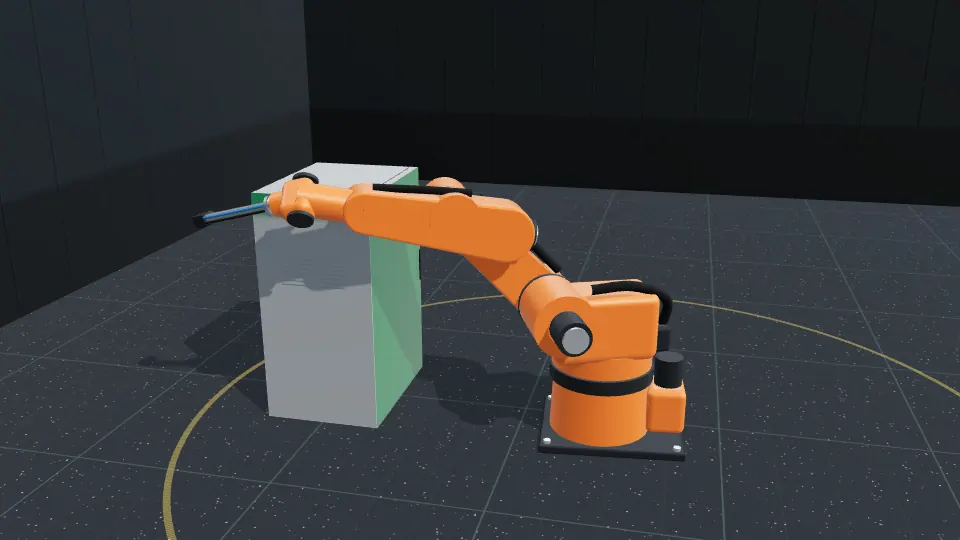
Toolpaths are calculated from the scan of the part instead of being written by hand for every new part.
Inducoat is an engineering startup from Kharkiv, Ukraine. We are developing a cell where a 3D scanner, our own software and an industrial robot paint a part from its scan: toolpaths are calculated automatically.
R&D stage: the architecture of the cell is designed, the physical system is not built yet.
These are design goals and expected effects. They can only be confirmed on physical equipment, and that is what we plan to do in pilots.
Toolpaths are calculated from the scan of the part instead of being written by hand for every new part.
Passes follow the elements of the part, so the spray does not work in empty space. Sensors track material consumption.
The same settings for the same parts reduce thickness scatter and the need to repaint.
A new part means a new scan, not a new program.
Less worker contact with the aerosol. Ventilation, explosion protection and guarding remain mandatory under the regulations.
Service by a Ukrainian engineering team, with no dependence on expensive foreign service.
We give no savings percentages or payback periods: only a pilot at a real plant can show them.
Typical problems at plants that paint the same parts every day.
Skilled painters are scarce, and training a new one takes months.
Skilled work costs more every year, and the result depends on one person.
Thickness and evenness change from shift to shift. Defects show only after curing.
Part of the coating material is lost as overspray, especially on open-work parts.
A new part means a new program or new manual setup.
Servicing imported equipment is expensive and slow.
This is a design scheme. The physical cell is not built yet, so below is what we are developing, not test results.
First version: a stationary six-axis industrial robot and liquid coating materials.
No required internet connection.
The industrial safety circuit does not depend on our software.
We do not replace the stock control system. We add a layer for geometry and path planning.
The project is at R&D stage. Terms, timing and cost are agreed for each plant.
A new turnkey robotic painting cell: equipment, our software and integration on your line.
Upgrading compatible robotic installations. We add scanning, path planning and digital records, and your working manipulator stays.
Custom automation projects for your plant.
Equipment service and support by a Ukrainian engineering team.
Rental and leasing of robotic systems.
Pick a part, set its size, scan it, plan the toolpaths and watch it being painted in 3D. Studio shows our idea before the physical cell exists. The Studio interface is in Ukrainian.
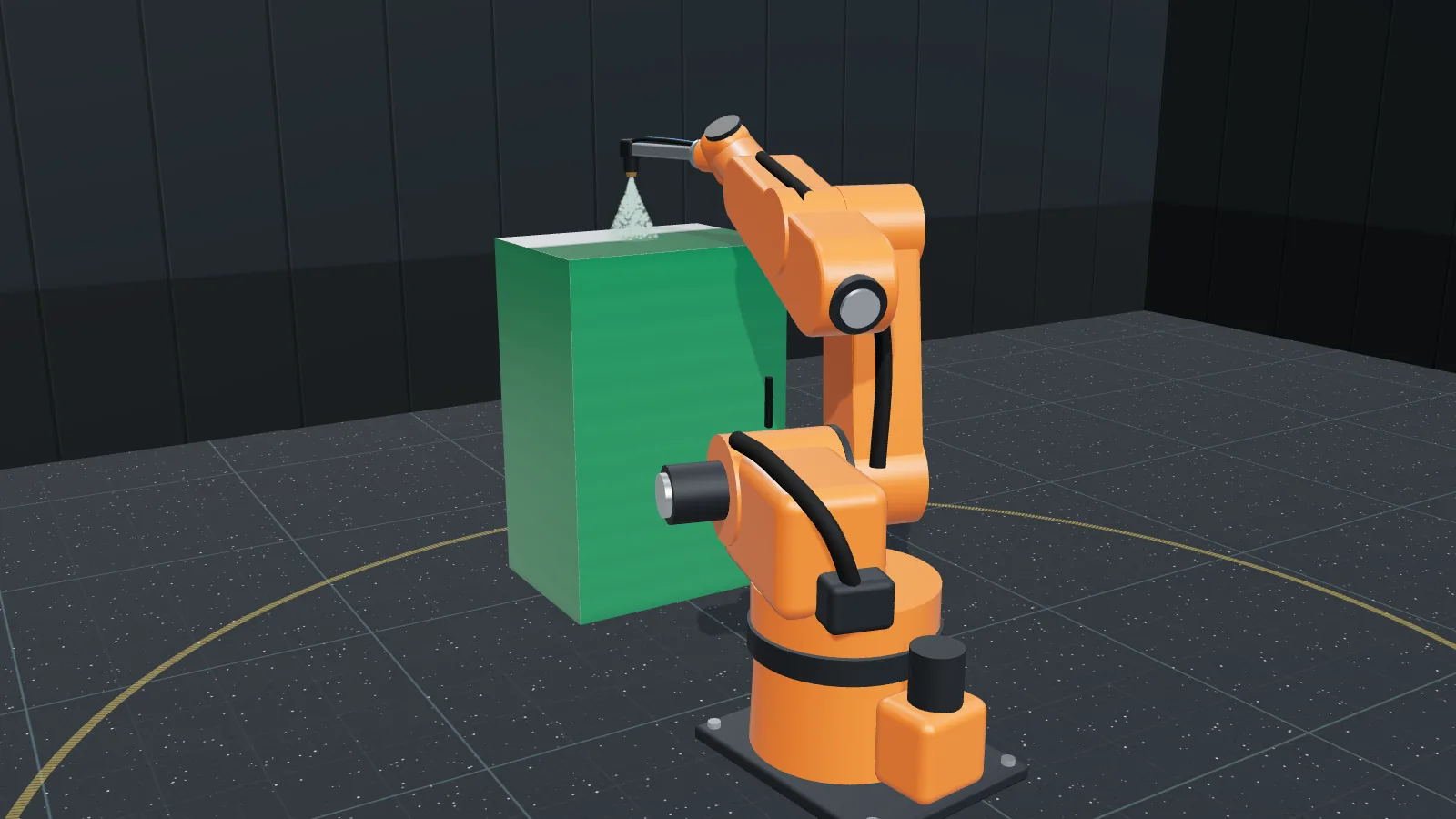
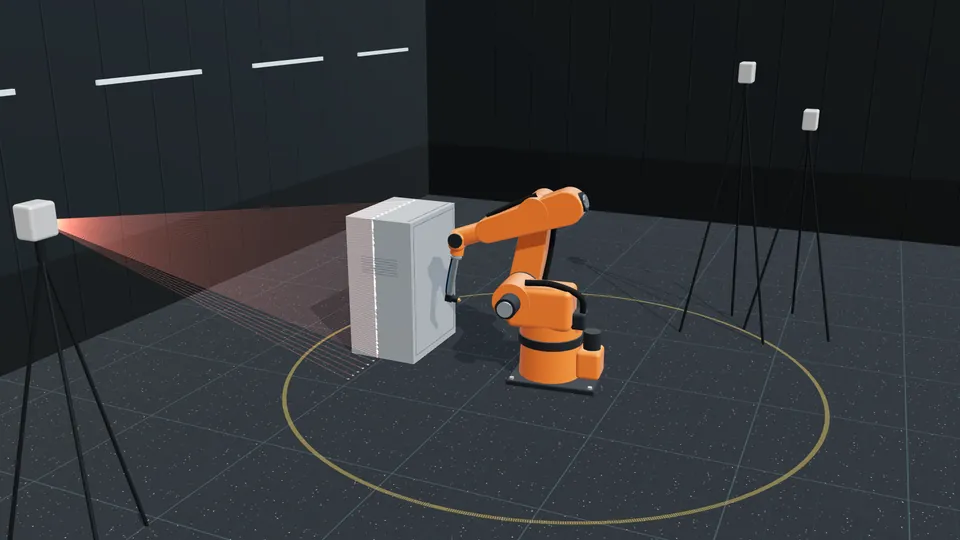
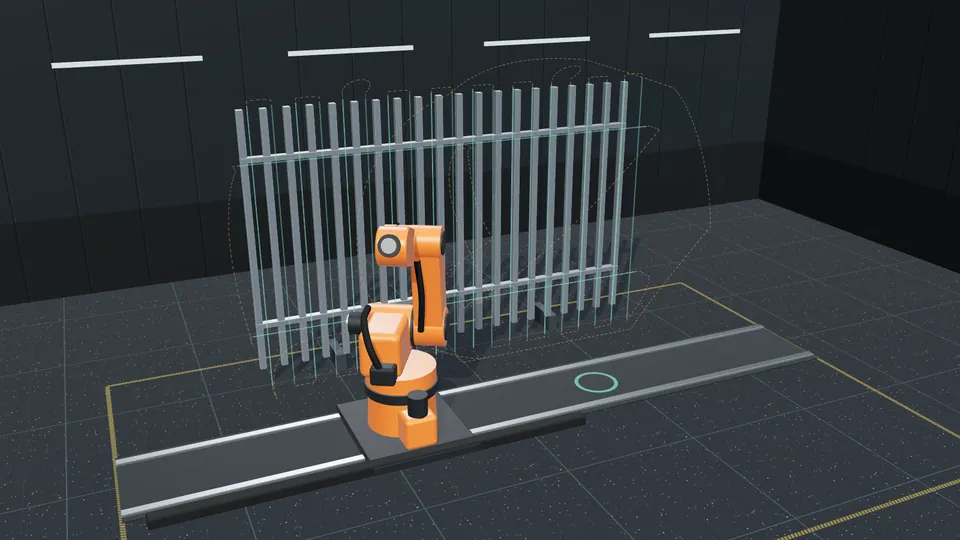
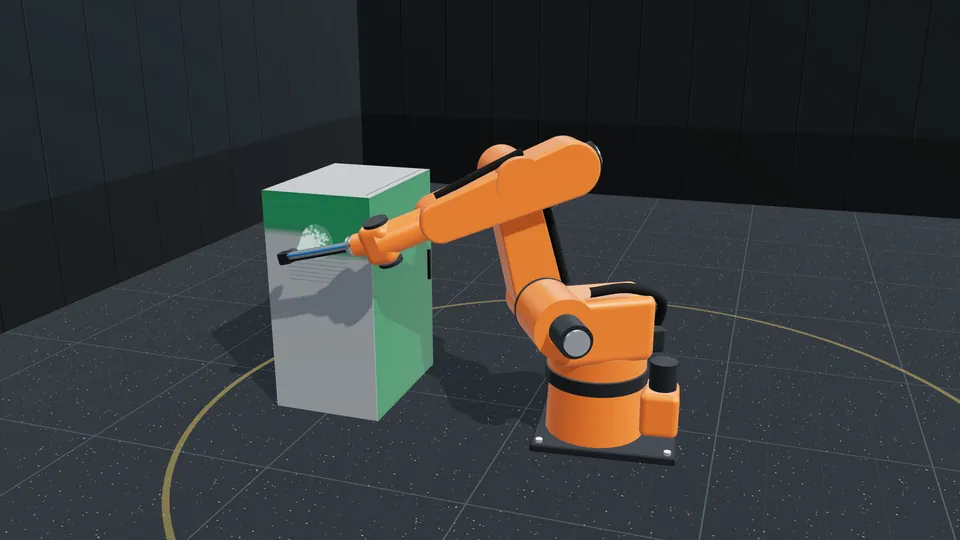
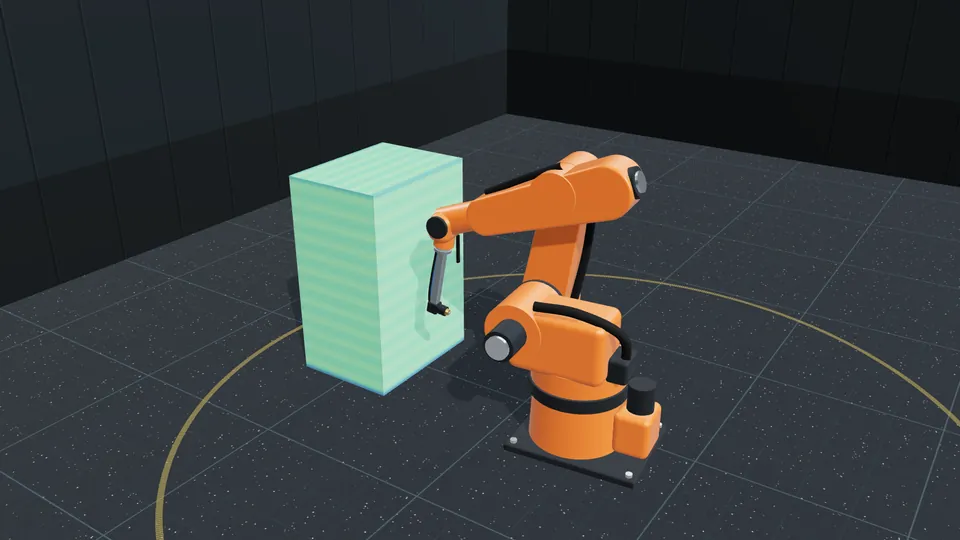
Studio is a separate demo. It is not connected to real equipment, does not control a robot and does not prove the throughput or accuracy of the future cell. An offline version without internet is available (about 1 MB).
These are design goals and expected effects. They can only be confirmed on physical equipment, and that is what we plan to do in pilots.
Toolpaths are calculated from the scan of the part instead of being written by hand for every new part.
Passes follow the elements of the part, so the spray does not work in empty space. Sensors track material consumption.
The same settings for the same parts reduce thickness scatter and the need to repaint.
A new part means a new scan, not a new program.
Less worker contact with the aerosol. Ventilation, explosion protection and guarding remain mandatory under the regulations.
Service by a Ukrainian engineering team, with no dependence on expensive foreign service.
We give no savings percentages or payback periods: only a pilot at a real plant can show them.
The interactive demo works in the browser and offline.
The architecture is designed. The system is not built yet.
It will confirm coating material savings, throughput and payback. Until then we do not promise them.
Short technical notes on painting, coating materials and upgrading installations.
What film thickness depends on in manual painting, why scatter between shifts appears almost every time, and what has to become repeatable so that quality stops depending on the person.
What overspray is, why it is most visible on open-work parts, and how building passes from the geometry of the part and tracking consumption may reduce the loss.
What upgrading an existing robotic installation means, what stays, what is added, when Retrofit does not fit and what to find out before the first conversation.
No. For compatible robotic installations there is Inducoat Retrofit: we add scanning, path planning and digital records, and your working manipulator stays. The robot's own controller always runs the motion program.
The industrial safety circuit does not depend on our software. The operator works outside the spray zone, but ventilation, explosion protection and guarding remain mandatory under the regulations.
No. We design the system to work locally, without a required network connection.
The first version will work with liquid coating materials on a stationary six-axis robot. It suits parts that are painted in repeated runs: MDF fronts, fences, enclosures, steel structures, automotive parts. The limits depend on the specific installation.
It depends on the part, volumes and existing equipment. We give no figures without a calculation for your plant, so a pilot is the way to get a real answer.
A Ukrainian engineering team from Kharkiv: software, integration and support in one team.
No. The project is at R&D stage: the architecture of the cell is designed, the physical system is not built yet. Inducoat Studio shows the concept but does not control any equipment.
For plants considering robotic painting or an upgrade of an existing robot. Tell us briefly about your part and coating, we will get in touch and discuss the pilot format. No payments, no obligations.
The form opens in a Tally window and is in Ukrainian. Your data is used only to contact you about the pilot, see how it is handled.
Copy the text below (if automatic copying is unavailable).